Mark Cooper · The Hatchery Man · Northeast Iowa Get the book
From 42 years inside a commercial chick hatchery

Stop losing chicks and hens to the small things nobody told you.

A draft under the door. A chick that never learned to eat. A lamp hung an inch too low. A quiet hen nobody picked up in time. The Hatchery Man's Flock Book shows you what to do, in the order you'll need it.

Instant PDF download · 77 pages · 8 printable tools · One payment, no subscription
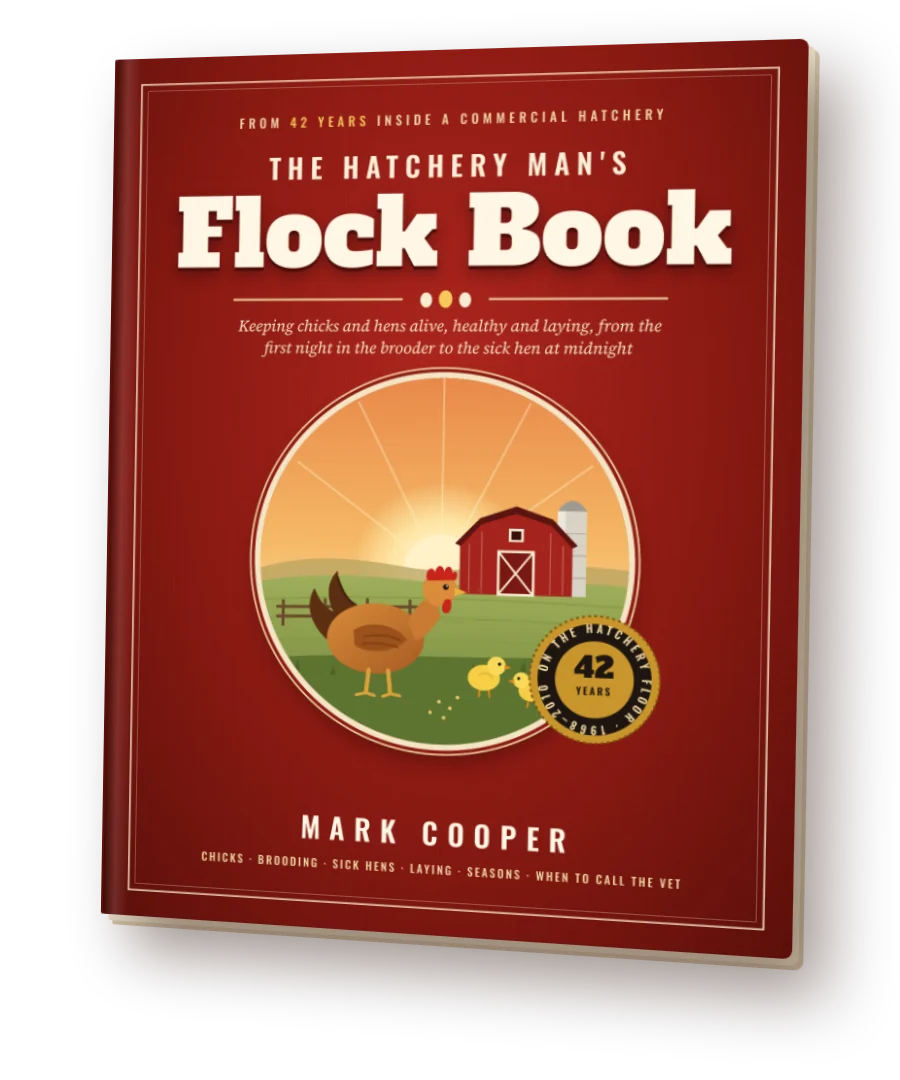
The Hatchery Man's Flock Book cover: a hen and chicks in front of a red barn at sunrise
77Pages
10Chapters
8Printable tools
42Years on the hatchery floor
Why birds are lost

It's rarely the rare disease.

Most backyard losses come from a handful of small, everyday things that are easy to fix if somebody tells you about them in time. Here are three this book walks you through.

The chick that never ate

Chicks live on their yolk for two or three days, so the one that never started eating looks fine until day three. One ten-second check on the first night catches it while there's still time.

The draft you can't feel

A brooder can read 95°F on the thermometer while a cold draft runs along the floor where the chicks actually live. You'll learn to read the chicks, not the gauge.

The quiet hen

Hens hide illness until it's late. A two-minute morning check and a five-minute look after dark tell you who's off before she looks sick.

What's inside

Ten chapters, in the order you'll need them.

Plain words, large type and US measurements. Every chapter ends with a short Do This Tonight list, so you're not just reading, you're doing.

PART ONE

Chicks

  • How chicks are hatched, sexed, vaccinated and mailed, and what that means for your box
  • Setting up a safe, draft-free brooder, with heat-lamp fire safety
  • The first week, day by day
  • The heat chart, week by week
PART TWO

The Laying Flock

  • Feeding by age, plus the foods that never go in the run
  • How to read a hen: morning and night checks
  • The sick-hen first hour, and what not to do
  • Why she stopped laying: a troubleshooting table
PART THREE

Keeping Them Safe

  • Getting through heat waves and hard winters
  • Finding mites and lice, and why you check at night
  • When to call the vet, when to wait, when to report
  • Simple habits that keep disease out of your flock and your house
The Toolbox

8 pages to print and tape up.

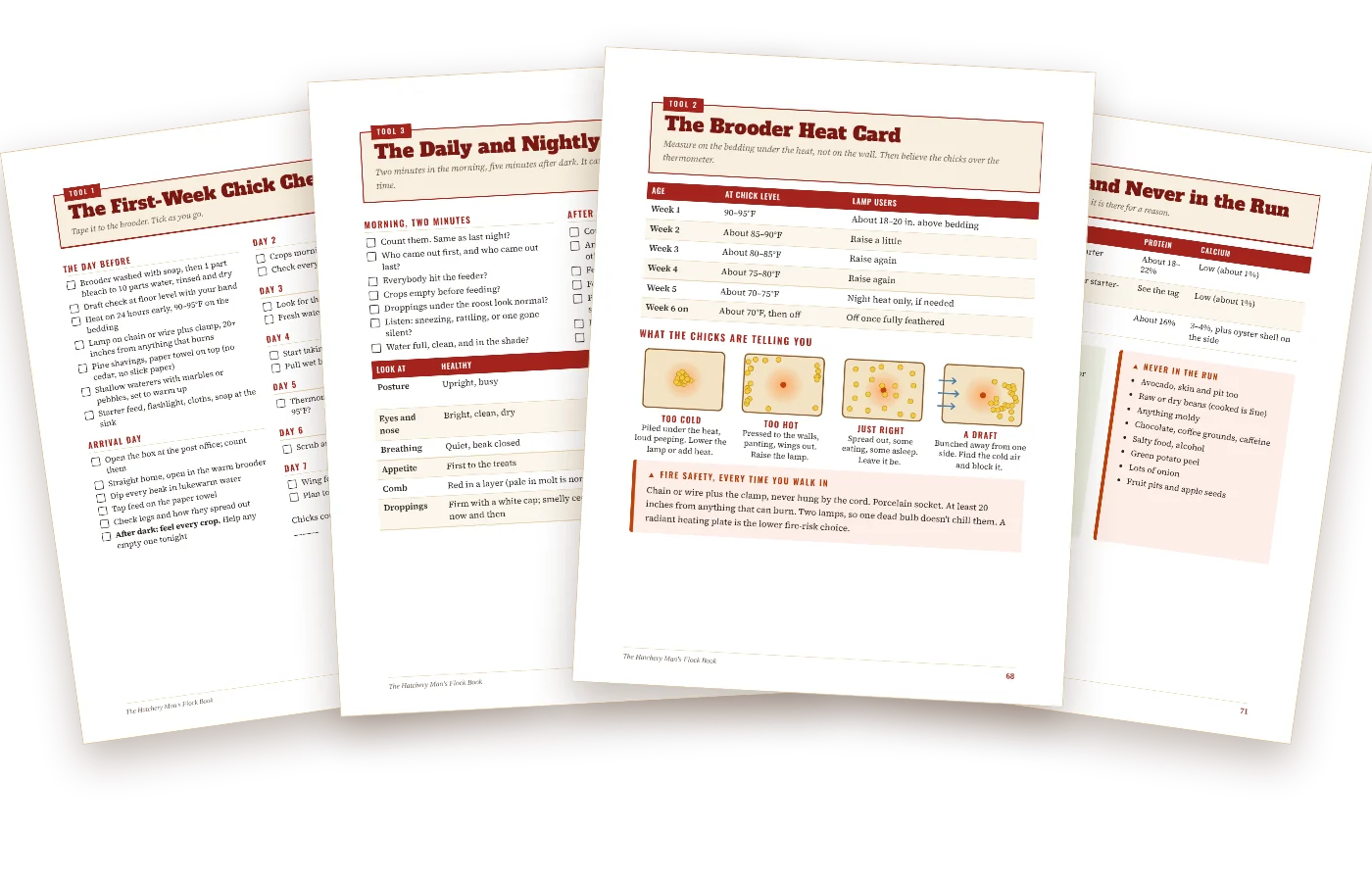
The short version of everything, for the brooder wall, the feed room door and by the phone. When a hen's in trouble at midnight, you won't want to go hunting through chapters.

  1. The First-Week Chick Checklist
  2. The Brooder Heat Card, with "what the chicks are telling you" diagrams
  3. The Daily and Nightly Flock Check
  4. The Sick-Hen First-Hour Card
  5. Feed by Age and Never in the Run
  6. Vet or Wait: The Phone Card
  7. Flock Health Log
  8. Egg Count Calendar
Printable pages from the book: the heat card, sick-hen card, daily check and phone card
Read a page before you buy

From Chapter 3: The night-one check

Sample

This is the most important thing in the whole book. The first evening, after dark, pick up each chick and gently feel the front of its chest, a little to the right side. That's the crop, where food goes first. In a chick that's been eating it feels like a small, soft bean bag. A chick with an empty crop the first evening needs help tonight, not in the morning.

Dip its beak again. Make a little softened starter with warm water and put it in front of the chick. Set it next to a chick that's eating so it learns by copying. Check it again before bed. By day two, every chick's crop should be filling.

The Hatchery Man's Flock Book · Chapter 3, The First Week, Day by Day

Mark Cooper, the Hatchery Man
Who wrote it

Meet Mark, the Hatchery Man.

Mark started at a commercial chick hatchery in 1968, sixteen years old, with a scrub brush and a stack of trays taller than he was. He stayed forty-two years: the candling booth, the setter and hatcher rooms, the incubator floor and the shipping line. In spring they set about a hundred and twenty thousand eggs a week.

Now he keeps fourteen mixed hens on the edge of a small Iowa town with his wife, June, who names every one of them. This book is everything he'd tell you over the fence, written down in order.

"The quiet one is the sick one."Vern, the old hand who trained Mark in 1968

Mark is not a vet, and he says so whenever it matters. This book helps you notice trouble early, do the right first things, and know when to pick up the phone.

Instant download

Get the whole book today

$29.99One payment · No subscription
  • The Hatchery Man's Flock Book, 77-page PDF
  • 10 chapters across chicks, laying hens and flock safety
  • 8 printable checklists, cards and logs
  • A "Do This Tonight" list at the end of every chapter
  • Read on your phone, tablet or computer, or print it
Get the book · $29.99
Secure checkout through Gumroad. Your download link arrives by email straight away.
30DAYS

Read it, use it, and if it isn't for you, ask for a refund within 30 days through your Gumroad receipt. No fuss.

Questions

Straight answers.

How do I get the book?

Right after you pay, Gumroad emails you a download link, and you can download it on the page straight away too. It's a PDF, so it opens on any phone, tablet or computer.

I'm not good with computers. Will I manage?

If you can open an email, you can open this book. Tap the download link and it opens like a photo would. The type is large and easy to read, and you can print it if you prefer paper.

Can I print it?

Yes. The eight Toolbox pages are made to be printed and taped up in the garage, the feed room or by the phone. You're welcome to print the whole book for your own use.

I've kept chickens for years. Is this too basic?

Plenty of it will feel familiar. Where it earns its keep is the hatchery side: why chicks fail on day three, how to read a brooder, the night checks, and the vet-or-wait list. Most experienced keepers find a few things they wish they'd known sooner.

I'm brand new. Is it too advanced?

No. It starts before your chicks arrive and goes one step at a time, in plain words.

Does this replace a vet?

No, and it says so. It helps you spot trouble early, do the right first things, and know when it's time to call. The Phone Card has spaces for your vet, your extension office and the USDA sick bird hotline.

Where does the advice come from?

Temperatures, feeding, health signs and safety guidance were checked against university extension services, the USDA, the CDC and veterinary references, which are all listed at the back of the book.

Is this a subscription?

No. You pay once and the book is yours.

What if it's not for me?

Request a refund within 30 days of buying through your Gumroad receipt and you'll get your money back in full.

Your flock is counting on the small things.

"Keep them warm, keep them dry, and keep an eye on the quiet one." · Mark

Get the book · $29.99
Instant PDF download · 77 pages · 8 printable tools
Get the book · $29.99